A Simple Framework to Make Habits Stick Without Apps
Forming new habits can be deceptively difficult. Many productivity enthusiasts turn to apps, notifications, and digital reminder systems in hopes of reinforcing consistent behavior, yet these tools often fall short of fostering lasting change. The reason lies not in our devices but in how the brain naturally encodes and retrieves information. Habits are not solely actions we choose; they are learned automatic responses shaped by repeated exposure to consistent contextual cues that trigger a routine with minimal conscious effort. In psychological terms, when a behavior occurs frequently in the same context, the association between environment and action strengthens, making the response automatic over time. This process explains why much of human behavior—up to nearly half of daily actions—is habitual and context-dependent rather than deliberative.
Understanding this cognitive mechanism offers a powerful alternative to digital habit tools: memory anchors. Rather than relying on reminders that interrupt your workflow or demand attention, memory anchors use stable, familiar routines and contexts as intrinsic cues that prompt new behaviors. By linking a desired habit to something already woven into your day, you can leverage the brain’s innate tendency to form associations, allowing habits to emerge through repetition and contextual stability rather than constant prompts. This introductory framework situates memory anchors within well-established habit science and sets the stage for practical strategies that help habits stick without the need for apps or external reminders.
What is Memory Anchors and Habit Formation?
Habit formation is a psychological process in which a behavior becomes automatic through consistent repetition in a stable context over time. The key components of habit formation include a cue, a routine, and a reward loop. A cue acts as the trigger that initiates the behavior, the routine is the action itself, and a reward reinforces the behavior by creating positive feedback in the brain. Over repeated cycles, neural pathways strengthen around this loop, making the behavior more automatic and easier to execute without conscious effort. Research shows that the context cue—whether it’s a time of day, preceding action, environment, or an existing routine—plays a central role in shaping habits by signaling when the brain should activate a stored behavior.

“Memory anchors” in the context of habit formation are essentially cues that embed a new behavior into an existing routine so that the act of remembering becomes automatic. These memory anchors operate on the same psychological principles as habit stacking or cue-based learning, where you pair a desired new habit with a familiar and reliable action you already perform. Since the brain has already developed an automatic response to the existing action, linking a new behavior to it reduces the cognitive load required for recall and execution. [1]
The science behind this approach is rooted in how memory and learning interact. When you consistently pair a new behavior with a familiar one in the same context—such as a specific time of day or sequence of actions—your brain begins to form an association. Over time and with repetition, the presence of the anchor cue naturally triggers the new behavior. In this sense, memory anchors serve as stable triggers that guide attention and action without reliance on external tools, notifications, or apps. [2]
Psychological research supports the idea that automaticity, or the ability to perform a behavior with little conscious thought, depends heavily on the consistency of context and repetition. This is why consciously creating links between cues and desired behaviors is more effective than relying on motivation alone, which is inherently variable and demands significant cognitive resources. Establishing memory anchors leverages the way the brain naturally forms associations, allowing habit formation to proceed with less friction.
Practical Techniques for Using Memory Anchors to Build Habits
To implement memory anchors effectively, start by identifying routines that are stable and already integrated into your daily life. These can be activities like brushing your teeth, brewing your morning coffee, checking your email at a regular time, or transitioning between work and personal time. The critical element is reliability: these routines must occur with predictable frequency so that the brain begins to regard them as cues. Once you identify such anchors, the next step is to define the new behavior you want to build and explicitly link it to the identified anchor.
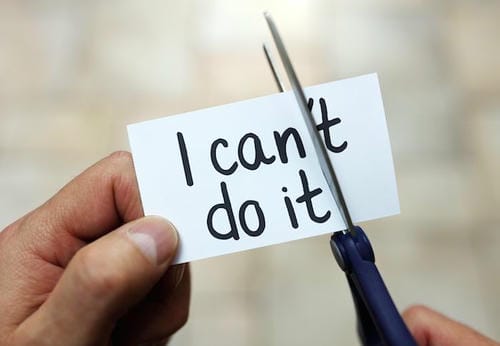
A simple formula often used in psychology and habit literature is: “After I [existing routine], I will [new habit].” This if-then format—also referred to as an implementation intention—helps create a mental association that directs your attention and action toward the new behavior at the appropriate moment. For example, “After I pour my morning coffee, I will do one minute of stretching,” or “After I close my laptop for the day, I will write down one reflection about my work.” These clear and context-specific plans reduce the need to remember the habit independently because the preceding action primes your memory for it.
When you attach new habits to existing routines through memory anchors, you are leveraging the brain’s cue-response system, which is much more reliable than goal-based motivation. The cue triggers the behavior almost reflexively because the association has been reinforced by repetition in the same context. This method also helps reduce “decision fatigue”—the depletion of mental resources that occurs when you constantly have to decide whether to engage in a behavior. By integrating the new action into a familiar sequence, you externalize part of the cognitive work onto your environment and routine structure.
Another practical technique for reinforcing memory anchors is to make cues salient and hard to overlook. Visual habit reminders—such as placing your workout clothes where you will see them in the morning or sticky notes on your bathroom mirror—can serve as environmental anchors that support memory. These visual cues reduce the mental effort required to remember the habit and provide a prompt that draws your attention to the action you intend to perform. This strategy works especially well when the environmental cue is linked spatially or temporally to the anchor ritual.
In addition to visual anchors, consistency in context enhances habit formation. Performing the new behavior in the same environment or at the same time of day strengthens the association between the anchor and the action. For example, practicing five minutes of mindfulness immediately after waking up in your bedroom every morning is more likely to become automatic than performing the same behavior at random times. Over time, the repeated pairing of context and response engrains the link in memory, making the behavior more effortless.
While memory anchors are powerful, it is also helpful to design the new habit to be small and achievable at first. Starting with a minimal version of the behavior increases the likelihood that you will perform it consistently, which strengthens the neural pathways that support that pattern. A small habit that reliably follows an existing routine reinforces the cue-behavior connection, and over weeks of consistent repetition, the behavior begins to feel like a natural extension of your daily life.
Ultimately, embedding new habits through memory anchors transforms how you structure your intentions and environment. Instead of relying on willpower or external reminders, you integrate the habit into your lived experience by connecting it to what your brain already does automatically. This approach aligns with cognitive psychology principles that emphasize context-dependent memory and cue-based learning, making habit formation a process of strategic association rather than persistent effort.
Sources:
[1]: https://draxe.com/health/habit-stacking
[2]: https://www.cohorty.app/blog/the-complete-guide-to-habit-formation-everything-science-knows-about-building-habits-that-stick
[3]: https://www.empowered-psychiatry.com/blog/habit-formation
[4]: https://www.buoyhealth.com/learn/adhd-visual-habit-reminders
[5]: https://das-wissen.de/gesundheit-wellness/psychologie-und-mental-health/die-psychologie-der-gewohnheitsbildung/en
References:
https://openup.com/blog/the-psychology-of-habits-why-we-do-what-we-do
https://bfa.art.illinois.edu/2024/wp-content/uploads/2024/04/booydegraaff_ava_07.pdf
https://www.centreofexcellence.com/what-is-habit-stacking
https://en.wikipedia.org/wiki/Habit
RECOMMEND FO YOU